Faces and fascism

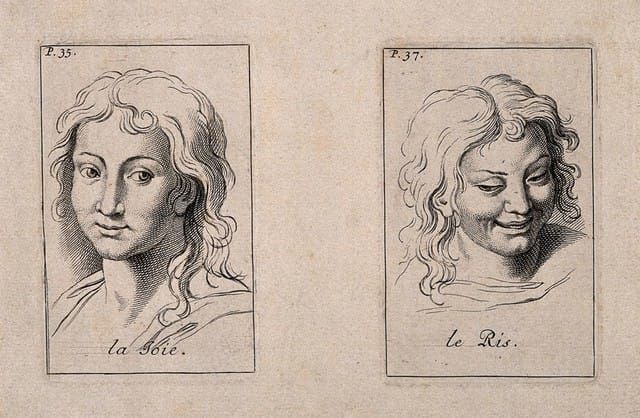
The thing about me is that I love a face. I love to see a face and think good god, that's a face. A face that gives the world assurance of a face, do you know what I mean?
But another thing about me is that I'm a woman who lives in the world as it is today, who is well into adulthood and all too used to seeing new beauty trends arise and spread and become something we all take for granted. And it's impossible to be a woman who lives in the world and not be very aware of what I am supposed to look like to be doing womanhood properly. It's impossible not to be very aware of the ways in which you are failing to do that.
I think of these two things – the love of faces, the systemic pressures on women and their appearances – a lot, especially when I'm trying to soothe my feverish brain with mindless entertainment. I watch, for example, the BBC's make up show, Glow Up and get frustrated by contestants who have a lot of fillers. Because surely if you want to work on human faces for a living you should have some appreciation for human faces.
It's for this reason that I find Drag Race: Down Under so refreshing to watch compared to other versions of the show, because of how likely you are to see queens who've had no plastic surgery at all! There was a series of Drag Race: UK with three queens I could not at all tell apart, not even at the very end, because they'd all had exactly the same fillers and lifts and they all defaulted to blonde wigs. And when I see drag artists lean on surgery I can't help but feel a little sad and angry because it feels like a statement, once again, on what women are supposed to look like.
It bums me out enormously whenever an actress who's beautiful and striking and distinctive suddenly shows up looking tauter and plumper and younger, yes, but also so much more bland. It bums me out that it's now normal and common to choose homogeny over aging.
I don't know whether the concept of aesthetics as connected to ideology is having a moment in general, or if it's just having a moment in and around me but I have stumbled recently on a lot of commentary on it.
The clip of Hannah Einbinder talking about the correlation of the rise of fascism with the rise of extreme thinness has been cropping up on my Instagram again. Articles questioning whether it's fair to discuss Ariana Grande's concerning appearance have floated across my algorithm. Jia Tolentino wrote an excellent piece about the reality distorting effects of plastic surgery trends. Journalist and noted friend Marie Le Conte wrote last week about plastic surgery being incompatible with her particular brand of feminism. This one is definitely just me, I listened to an old episode of Diabolical Lies on SkinnyTok, which dives a bit into the history of fat-phobia, and the extent to which it's rooted in ideas of class and white supremacy. Other old episodes of Diabolical Lies on highlights and filler and MAGA aesthetics.
I don't want to slip into a tirade about how keeping your natural face and body is an act of resistance, but I do think current aesthetic trends and the rise of fascism are connected. But I don't think it's necessarily about making women physically weaker. I don't think it's necessarily about having our minds so occupied by our appearance that we are left with no room for thoughts of rebellion. Although those might be a bit of a bonus.
I think it's about conformity.
Even without pinning it to the wider horrendous themes that underpin our existence here in the late stage capitalist hell we're forced to live in, it's this that has driven me crazy about modern beauty trends. Everyone looks the same. And honestly it's not just that everyone has the same fillers; it's also the fashion for intensely contoured make up. It's undeniably fascinating to watch someone change the entire structure of her face with make up, but the question remains why do you want to change the entire structure of your face?
Every little biological fashion don't impoverishes the world. Every time we accept a ruling against having a bump in your nose, or hooded eyelids, or round cheeks or whatever the fuck, we get a little more boring.
It's undeniable that this is deeply patriarchal. Women are supposed to be dainty and pretty and perfect. We're supposed to be neatly turned out. There has always been a very narrow gap for women between what is ideal and what is acceptable as regards the way we look. Just looking competent and professional requires constant upkeep; the unending need to assert control over your organic body. Your legs have to be smooth, your eyebrows plucked, your hair shouldn't be frizzy, you should be wearing make up and heels, etc, etc, etc.
There have always been general rules for the presentation of yourself as a human women, but we are in an era where it feels like a lot of specific rules a coming into play. And because we're so used to accepting that there are rules around how we look, it's easy to let that happen without asking too many questions.
It can feel complicated to talk about bodies and faces because criticising what people do with their own bodies feels like overstepping. I believe wholeheartedly in bodily autonomy and I assume basically everyone I ever interact with does too; why else live in an artsy, progressive bubble? But it's important to consider individual decisions in relation to the context within which they're being made.
We have to ask why it's normal to turn so readily to botox and fillers and face lifts, why it's been so easy for us to return, again and again, to an ideal of feminine beauty that involves extreme thinness.
Why, in short, we have accepted as normal the wholesale rejection of our own exquisite variety and imperfection.
We are herd animals. When we feel unsafe we look for belonging. We seek out a group that will protect us and try to communicate to that group that we fit with them. The way we present ourselves physically is an act of communication and, like all means of communication, it relies on our collective sense of meaning.
Wearing a pencil skirt and blazer to the office says something different than wearing the same thing to Sunday brunch and we all implicitly understand that difference. Our faces and bodies communicate things too, despite being largely out of our conscious control, and with the dramatic technological shifts of the last hundred years or so that tendency has only increased.
What we like about faces and bodies has changed, of course. Everything follows a fashion and fashion usually follows wealth. It used to be fashionable to be plump and pale because that indicated that you had access to plenty of rich foods and didn't have to work outside in the fields. Peasants were scrawny and brown. Now it's fashionable to be thin and tanned because that indicates that you can afford to eat organic and go to hot yoga and take holidays in the tropics. You're not stuck in a cubicle all day, you don't sit on the couch eating junk food like a poor.
It's extremely difficult to unpick the assumptions around this, in part because they're everywhere, but also because appearance is an act of communication. It's hard to unlearn a language. But languages shift and evolve. The word basic has a very specific modern meaning that arose as if from nowhere roughly a decade ago and we all understood and accepted it easily. We do this kind of thing all the time with language, so if the way we look is a tool of communication then those meanings can shift and change to.
If you look at social and political shifts over time everything appears to be a reaction to a reaction to a reaction, and we can see this happening in fashion a lot. Skirts go from massive to small, waists rise and fall, the vibe goes from rigidly controlled to loose and easy and back again. And what drives those shifts can tell us a lot about where our collective consciousness is at a given moment.
Fashion follows wealth. But not all the time. Sometimes fashion follows a counter culture. There is a constant push and pull between the elite of the status quo and the outsiders who are notable simply for refusing to follow that elite. Fashion trends can operate as a barometer for how we relate to existing structures – are we trying to conform to the system, or differentiate ourselves from it.
We had an era, for a while, where it was cool to reject at least some conventional beauty standards. It encompassed a few different things, but I think it could fairly be described as a lowkey queering of the mainstream. Part of this was intentional, of course; queer people asserting their own identities and having them accepted in a way that wasn't common in the 90s. But part of it I think is simply the result of the fact that conventional beauty standards are intensely gender essentialist.
For a while it was safe, cool even, to stop shaving your legs. To dye your hair vibrant colours. To have visible tattoos. All things that have always been acceptable in niche contexts, naturally, but suddenly even corporate environments started to look a little artsier, a little edgier.
There were, I think, two significant things going on during this time. One, we were making a little bit of genuine political progress and it felt like we were making significant amounts of political progress. The first black president in the US, equal marriage laws coming into place, surely we were right on the cusp of doing something real about the climate crisis?! Two, we were all on a genuinely open and anarchic internet that meant that anyone could find an audience for whatever their weird shit was, and anyone could find a community that understood them.
Those things both died around the same time.
The internet has gone from being a place to experiment to being a place to hustle. In both senses of the word. People always chased clout there, but increasingly now they are chasing an income, or at least part of an income. And the algorithm determines your ability to do this. The algorithm tracks what people look at and tries to give them more of that, so you, the burned out user with ten side hustles, are constantly trying to adhere to that established standard. You are chasing what everyone is already watching. Content becomes homogenised and repetitive, this is by design.
You see this over and over again. Everyone tapping their fingernails on shit to get a little ASMR. Everyone declaring things kind of chic or whatever the meme is this week. The point is no longer to be original. It's to copy other people in a effort to get a little bit of the attention. To indicate that you belong. That you can be trusted. That you should be included. And the first thing that communicates that you belong is your face.
We share our appearance so much more widely these days and we're given access to a much wider range of other people's appearance. And as everyone we see online starts to look more and more alike it reinforces the idea that there's a right way to look – if you spend enough time scrolling, that idea becomes strong enough to almost override the real world around you where you'll still find some variety.
The more faces you see that are adopting the same procedures the more you'll feel like you're supposed to adopt them to. And every person that accepts that premise makes that impression stronger for everyone else.
These procedures cost money. Fillers shift over time – losing structure to become a thin layer under your skin – so you have to get more. You aged a little more every day, so regular botox becomes more and more essential. The amount of make up it takes to achieve the pristine, flawless, contoured look of the moment is massive, and you have to put it all on every time you post, even if you're doing nothing else that day.
The fashion is chasing wealth, or the appearance of it. Everyone looks the same and everyone is spending a lot of time, money, and mental energy in order to keep looking the same.
I think this is important. Everyone is investing heavily in adhering to aesthetic standards. They're willing to pay a high cost of entry into this particular in group – an in group that is rooted in patriarchal and white supremacist gender norms – and when you've paid a lot to get in, you might put up with a lot to avoid risking expulsion.
I know it feels kind of silly. This is all so superficial. But honestly we are superficial creatures. The things that matter to us personally drive our core identities. Reinforcing those norms psychologically ties us to the group that demands them; every time we agree we commit a little more.
We do need to accept that the political movements of our civilisation are largely driven by people who are not particularly politically engaged. The assumption is that a person's political beliefs are driven by how they believe society should be organised. But most people don't think about how society should be organised at all. Most people's political ideology is pretty vibe-based. And a lot of it is down to who they identify with.
This person is like me is powerful framing. So when huge amounts of people are narrowing their ideas of who they should be like, look like, act like, that is going to narrow their ideas of who they should vote like.
What you look like is a massive drive of your personal sense of identity, which is why a drive towards homogeny is so valuable for fascism. The more we bow to the pressure to fit in, the harder it is to dissent.
There have been a lot of jokes about MAGA face, about all these women who look so unnatural in exactly the same way. I think that looking the same is the point. It's like a subconscious uniform. It's purpose is to unify.
Fascism often follows periods of economic insecurity. Desperate people are easily manipulated. When you feel like you have been deprived of the resources you need to live a full life, you look for someone to blame, and you start supporting systems of control that will subjugate those scapegoats and give you power over them. When you consider this from a distance, as a population-wide phenomenon, it's easy to forget that this is deeply personal for each individual.
I've been extremely economically insecure for the last couple of years (please consider a paid subscription) and one of the funny things I've noticed is how much that state of being can make you emotionally insecure. It's made me feel insecure about my work, which is perhaps natural given that's where I get money from, but it's brought up all kids of other crap as well.
It's made me think about whether all my friends are hanging out without me, finding other, cooler, funnier friends. It's made me fret about my wardrobe and whether I'll ever find a cohesive personal sense of style. It's made me feel drab and dull; it's convinced me I'm a burdensome drain on everyone I know. Money forms the foundation on which you move through the world and when you don't quite have enough to get by every other facet of life becomes unsteady. It really throws the psyche out of whack.
It's a feature of our current hellscape that even people who are currently making a decent living feel a lot of anxiety about their ability to do so in the future. Jobs feel scarce and unreliable, the future terrifying. And so many jobs that used to involved just doing the job now also involve marketing yourself on social media. And that increasingly comes with pressure to alter yourself to fit with the increasingly visible norm.
It's a complicated and upsetting thing to think about. We're all just trying to survive and I don't want to judge anyone for what are completely understandable decisions. I do want to judge a society that has made these decisions so very understandable.
It feels impossible to unpin your own ideas about who you are from the pervasive messaging about what you need to be in order to be acceptable. But I think we should be trying. I think it's about more than just personal growth. We do nothing alone. Our decisions have an impact on the world around us.
We need to recognise that fillers, botox – all of it – serves something besides our personal self-image and decide if we're ok with serving that thing. That thing being corporate, patriarchal overlords.
I would like us to be encouraging each other to adopt a punk attitude to our appearances again. I would like us to, once again, damn the man.