What is even the point of London

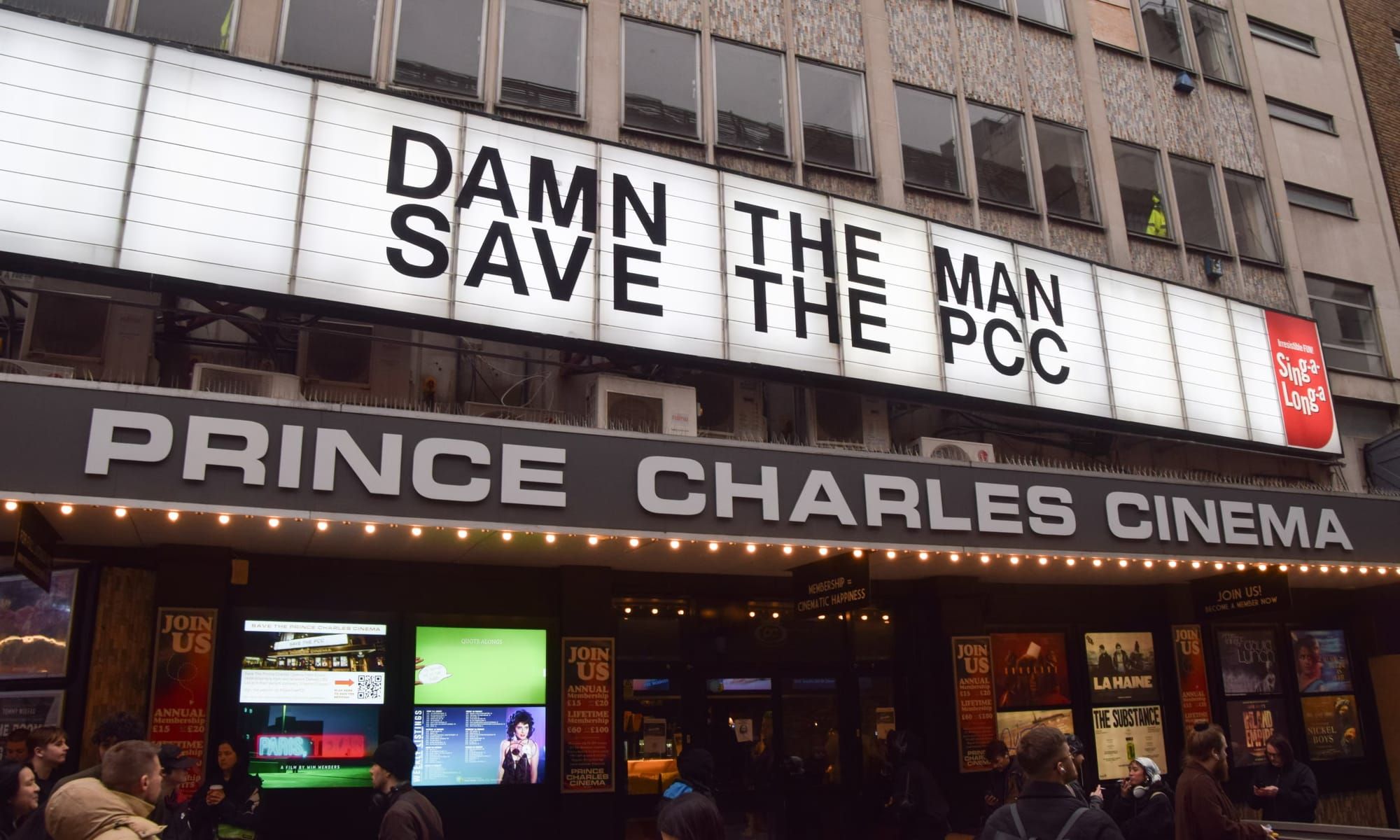
This week, some good news: The Prince Charles Cinema has been saved from it's billionaire landlords. I realise this may not matter, or even make sense to people who don't live in London, and I realise I risk becoming an everything about London is important stile Londoner but I have a wider point, if you'll bare with me.
If you want the detailed tea on this fight, London Centric has been doing excellent reporting on it since the beginning. They have also been covering the many other shady practices of the cinema's landlord, Criterion Capital, a property firm owned by billionaire Asif Aziz.
If you want the gist, it is this:
The Prince Charles Cinema rules. It's in the middle of the city, right by Chinatown, giving the perfect opportunity for an ideal night out: dumplings and a movie. It does not traffic in new releases, unless they're incredibly niche in which case they're shown in the smaller of its two screens. It shows old films in a curated but not snobby manner. It happily lists Casablanca and The Third Man alongside Urban Legend and Gremlins. I saw Seven Samurai there for the first time, and I have also been to their regular solve-along Murder She Wrote. Twice. They showed The Thing on film a few years ago and the print was so old it had developed a pink tinge, which was delightful.
It's cool as hell, a real London institution, John Waters does its turn off your cell phone announcements, I am willing to face Leicester Square on a Saturday night just to watch a film there – even one I've seen twelve times before, own on bluray, and is currently available on at least three streaming services.
When their lease was up Criterion Capital raised the rent and insisted on including a break clause in case they decided they wanted to turn the building into accommodation instead.
There have been suggestions they would use the location for a new branch of their hotel chain, Zedwells.
There is a Zedwells near my house. The vibes are rancid. What if bland corporate but a bit bougie, you know? They call their rooms cocoons because they don't have windows and they're trying to pretend that's a good thing. They do things like claim that Greenwich North tube station is a twenty minute walk away when it's actually a twenty minute bus ride.
Fortunately, that's not going to happen. They've finally agreed to a twenty-five year lease with no break clause, and London gets to stay cool for a bit longer.
This is where we get to what I think is the central tension between London and some of the people who own it. By which I mean the four or five obscenely rich conglomerates who own most of the property in the city.
The central tension is that many people – the people who live here, the people who visit, the people who want to visit – know that London is cool. But the people who own London seem to only know that London is profitable. They don't realise that London is only profitable (or at least, only as profitable as it is) because it is cool. And if it stops being cool it will get less profitable.
If you turn all the buildings into hotels with rancid vibes then all there'll be to see here is hotels with rancid vibes and no one travels across the world to look at hotels with rancid vibes.
There has always been a weird relationship between people who have money and people who are cool, but I think it's shifted in the past couple of decades or so.
The very rich have always known that social clout from money can only get you so far. If you want cultural clout you have to do something a bit more interesting than just be rich. This is how artists used to make a living. The very rich would become patrons of artists and then they got to point and say look at this mad genius, he's mine and people would think they were the impressive ones for having discovered and fostered such a mad genius.
It was not a perfect system but it got artists paid and that means we have a lot of great art and music and theatre that we would not otherwise have.
In ancient Baghdad it was very cool to have a lot of books. The Arabic libraries had systems in place for copying and translating and recopying loads of books and everyone wanted to have libraries full of them. The richest managed to get first dibs, which is always the way, and this was not great for people who wanted to do something as pedestrian as buying books to read but it turned out well for everyone who wanted ancient texts to survive over time.
Because all the rich people wanted to look cool, they all bought all the books, so there were loads of copies of all the books, and the best way for a book to survive for a long time is for there to be loads of copies.
The clout of art buffs up the reputations of the rich and in turn the rich help the art survive.
For today's rich, this isn't enough. They want to profit financially as well as by reputation. They want to have their cake and eat it too.
The thing about a city as cool as London is that there are always people who want to be here, so there's theoretically no ceiling on how much you can profit by owning a bit of the city. And the landlords know this, but they don't recognise that they're the ones bringing down the value of their own asset.
London has been made famous by its legacy of weird freaks. Shakespeare, Dickens, whoever it was who gave pelicans to Charles II. The way to keep it cool is to make sure the weird freaks of today can afford to do their bit. To put on weird plays, to open weird shops, to maintain a consistent presence as a cinema in the heart of the city playing The Room on a regular basis.
If the people who own the city were willing to do that we would have no problem. But if we have to fight, it's a worthy fight to have. And good god! but it's great when we win.